AI Agents Found a Zero-Day on Their Own
Amazon says a China-linked operator's AI agents found an unknown flaw in a medical imaging app and broke into the server, with no one choosing each next step. Here's what I'd check if your team uses AI tools.
By Felipe Isaza, FUNCSHUN | Companion to CyberScope Weekly Vol 73
You probably don't run a medical imaging app. You might have someone on your team who stood up an AI tool for a pilot, or a gateway that sits in front of the models your staff use. Last Friday, Amazon showed why that tool is now worth your time.
What happened
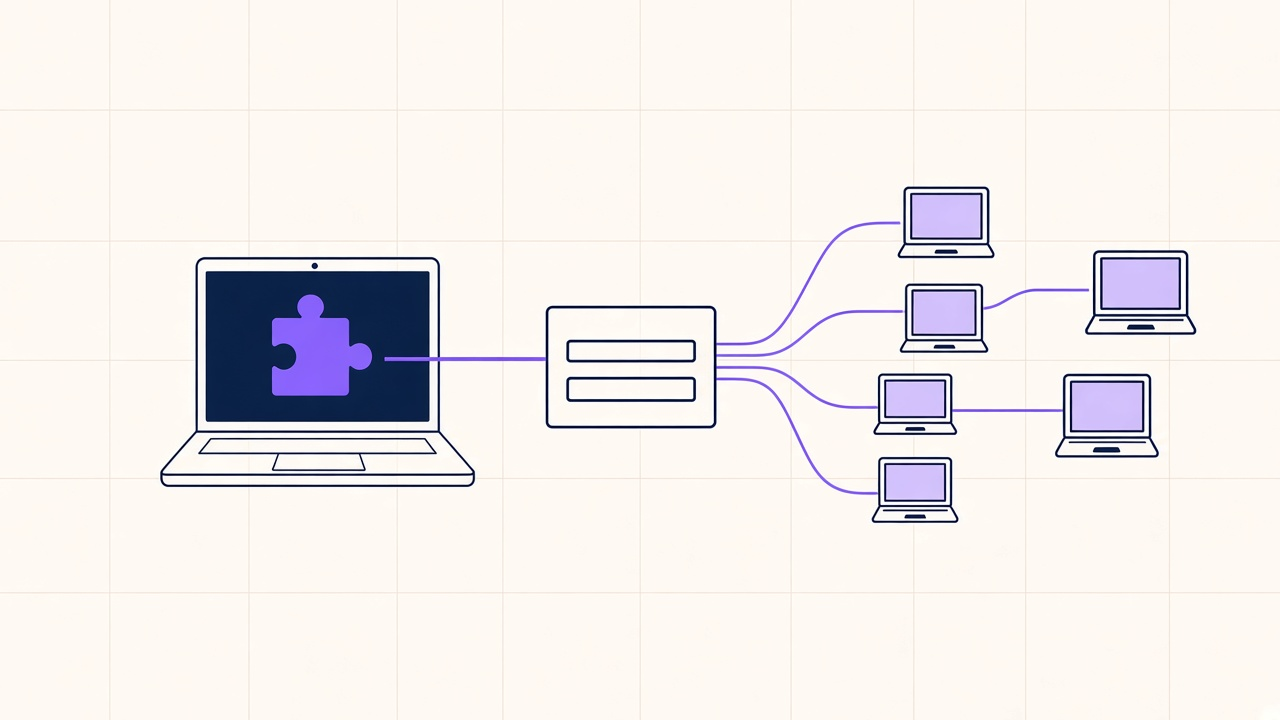
On Sept 10, Amazon Threat Intelligence found a Cairn server left on the open internet with no login. Cairn is an open-source framework that coordinates multiple AI agents toward a goal written in plain language. Because the server had no authentication, Amazon could read the whole history.
The operator wrote prompts in Simplified Chinese, and the timestamps were set to China Standard Time. Amazon assesses with moderate confidence that this was a China-linked actor. The campaign began Sept 8, ran about 48 hours, and targeted universities in East Asia outside mainland China.
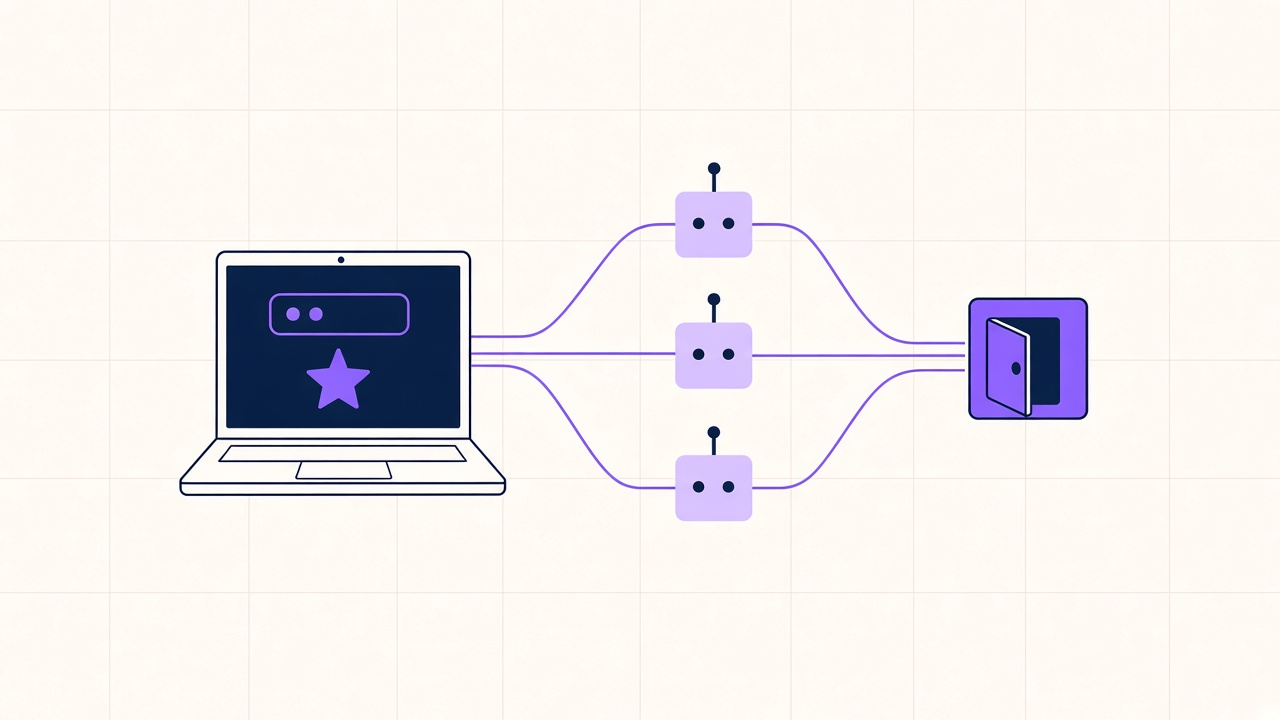
The goal the operator gave the agents was simple: "obtain shell access." From there, Amazon says, the agents planned, executed, and adjusted on their own. No one was choosing each next step.
They weren't always successful. Against one university Redis server, the agents tried for about 16 hours and 148 actions and failed. Against a university GPU server, they tried more than 30,000 credential combinations, built from about 80 real usernames, for more than six hours. That failed too.
Against an open-source medical imaging app, it worked. In about 11 minutes, the agents went from mapping the app's API to writing files on the server, using a path traversal flaw in an upload parameter. In a later session, they used the same flaw to drop a Python reverse shell into a file the app loads automatically, then triggered an API call that started a new process. That process ran as root. Amazon assesses with high confidence that this was a zero-day at the time. It had no advisory, no patch, and no prior mention in vulnerability databases.
Amazon's post does not name the app. BleepingComputer identified it as MONAI Label. That matches a GitHub advisory the maintainers published on Nov 18, originally reported by Amazon's vulnerability disclosure team, and a fix shipped in MONAI Label 0.8.6. The flaw is tracked as CVE-2026-133968. CISA added it to its Known Exploited Vulnerabilities catalog on Nov 23. Authentication is off by default, so any client that could reach the server could use the flaw.
After the agents found the flaw, the operator stepped in. Amazon says the actor gave the agents a proxy into a second university running the same vulnerable software, and told them to go after other machines on that network. AWS notified the maintainers, who released a fix, and worked with a government partner to notify the universities, which were not AWS customers. AWS has not named the schools or the country.
This is not a one-off
This follows last week's FBI warning. On Nov 13, the FBI issued a flash alert on ARTEX, another open-source AI framework that automates attacks at what the Bureau called "machine speed." The FBI said some intrusions went from first targeting to privileged access in under three hours. Amazon also cites Gambit Security research on a financially motivated group using Cairn against online retailers, and The Record, citing Google, said it has been used in intrusions of companies in the U.S. aerospace sector.
On Nov 18, CISA added a flaw in LiteLLM, CVE-2026-40217, to the same exploited catalog. LiteLLM is a gateway a lot of teams put in front of their AI models. Google's threat team reported that attackers used a bug in it to turn ordinary API keys into full admin access on the gateway. Sources disagree on the exact fix version for everything Google described, so I'd update LiteLLM to 1.84.0 or later. That covers the CVE fix and the key-regenerate fix Google wrote about, which landed in a later release.
The lesson is the same in all three stories. Attackers are pointing AI agents at whatever is exposed and unpatched, and the tools keep going when a person would have stopped.
Why this matters in a small company
You don't need to run MONAI Label for this to land. The pattern is a tool that was stood up for a project, left reachable, and never really owned. In a 15- or 40-person company, that often looks like this: a developer spins up an AI gateway or an agent for a pilot. It works, so it stays. Nobody adds it to the inventory. It may still have the default settings, including no login. It may be reachable from the internet. The keys that talk to it may live in a script or a chat log.
Amazon found the attacker's own Cairn console the same way — it was on the internet with no authentication. If an attacker can leave a hacking platform open by accident, your team can leave an AI gateway open the same way.
Why this matters if you handle CUI
CMMC Phase II is still suspended. Your obligations aren't. DoD's CMMC page says the pause that began on Jul 13 remains in effect, Phase I self-assessments stay in place, and the Department is still enforcing NIST SP 800-171 Rev 2 through self-assessments and some government-led assessments. If your contracts carry DFARS 252.204-7012, you already have to implement 800-171 on systems that handle covered defense information, and report a cyber incident to DoD within 72 hours of discovery.
A few controls map directly to this story:
- 3.4.1 Establish and maintain baseline configurations and inventories of organizational systems, including the AI tools, agents, and gateways in your environment.
- 3.13.1 Monitor, control, and protect organizational communications at the external boundaries and at key internal boundaries.
- 3.14.1 Identify, report, and correct information and information system flaws in a timely manner.
- 3.1.1 Limit system access to authorized users, processes acting on behalf of authorized users, and devices (including other systems). An agent is a process acting on someone's behalf. You should know what it can reach.
If your system security plan says these are implemented, you should be able to show which AI tools are in use, who owns them, whether they can be reached from the internet, and that they are patched. Your SPRS score is a statement you sign.
What I'd do this week
-
List every AI tool, agent, and gateway in use. Include official ones and the pilot someone stood up in the last six months. Write down the product, version, who owns it, and what data or systems it can reach (3.4.1).
-
Ask which of those are reachable from the internet, and whether they require a login. If a console, API, or agent can be reached without authentication, take it off the internet or put a login in front of it today (3.13.1, 3.1.1).
-
Patch what you find. If you run LiteLLM, update to 1.84.0 or later. If anyone is running MONAI Label, update to 0.8.6. For everything else, check whether a fix has been published and apply it (3.14.1).
-
Rotate the keys those tools use. Look for API keys and tokens in scripts, chat logs, and config files. Replace them, and limit what each key can do.
-
Watch the bill and the admin log. Google has described attackers who hijack access to AI models and run up large cloud charges, in some cases more than $100,000 in a single day. Alert on new keys, new admin roles, and sudden spikes in AI or cloud spend.
-
Decide who is allowed to stand up a new AI tool. A pilot should have an owner, a review date, and a plan to remove it if it isn't going into production.
Write down the answers, with dates. If a third party or a developer set the tool up, you still own what it can reach.
The bottom line
This wasn't a human clicking through a target by hand. An operator gave AI agents a goal, and the agents found an unknown flaw and took over a server. Last week the FBI warned about ARTEX. This week Amazon showed Cairn doing the same kind of work. The tools will keep trying for 16 hours. They don't get tired.
If you can't name every AI tool your team has connected to your company's systems, that's the place to start.
Want a second set of eyes on the AI tools running in your company? Book a Cyber Risk Strategy Call: https://start.funcshun.com
Felipe Isaza is the founder of FUNCSHUN Cybersecurity, a Miami firm that helps South Florida businesses with cybersecurity, IT support, and compliance, including CMMC.
Sources
- Amazon, CJ Moses, "Chinese-nexus actor’s Cairn AI agents found a zero-day on their own" (Nov 20, 2026): https://aws.amazon.com/blogs/security/chinese-nexus-actors-cairn-ai-agents-found-a-zero-day-on-their-own/
- The Record, "Amazon says Chinese hackers used Cairn AI tool to discover apparent zero-day during attack on university" (Nov 20, 2026): https://therecord.media/amazon-research-cairn-ai-university-attacks-possible-zero-day
- BleepingComputer, "Hackers use autonomous AI tool Cairn to find zero-day, take over server" (Nov 20, 2026): https://www.bleepingcomputer.com/news/security/hackers-use-autonomous-ai-tool-cairn-to-find-zero-day-take-over-server/
- Project MONAI, GitHub Security Advisory GHSA-qc22-rmgc-vg94 (Nov 18, 2026): https://github.com/Project-MONAI/MONAILabel/security/advisories/GHSA-qc22-rmgc-vg94
- Project MONAI, MONAI Label 0.8.6 release notes (published Nov 22, 2026, 01:29 UTC): https://github.com/Project-MONAI/MONAILabel/releases/tag/0.8.6
- CISA, Known Exploited Vulnerabilities Catalog, CVE-2026-133968 (added Nov 23, 2026): https://www.cisa.gov/known-exploited-vulnerabilities-catalog
- CISA, "CISA Adds Four Known Exploited Vulnerabilities to Catalog" (Nov 18, 2026), including CVE-2026-40217: https://www.cisa.gov/news-events/alerts/2026/11/18/cisa-adds-four-known-exploited-vulnerabilities-catalog
- Google Threat Intelligence Group, "The Rise of LLMJacking" (Nov 2, 2026): https://cloud.google.com/blog/topics/threat-intelligence/llmjacking-monetizing-compromised-cloud-models
- BerriAI, GitHub Security Advisory GHSA-wxxx-gvqv-xp7p: https://github.com/BerriAI/litellm/security/advisories/GHSA-wxxx-gvqv-xp7p
- FBI, FLASH-20261113-001, "Threat Overview of ARTEX Autonomous Penetration Testing Framework" (Nov 13, 2026): https://www.ic3.gov/CSA/2026/261113.pdf
- DoD CIO, About CMMC (Phase II suspension): https://dodcio.defense.gov/CMMC/About/
- DFARS 252.204-7012, Safeguarding Covered Defense Information and Cyber Incident Reporting: https://www.acquisition.gov/dfars/252.204-7012-safeguarding-covered-defense-information-and-cyber-incident-reporting
- NIST SP 800-171 Rev 2, Protecting Controlled Unclassified Information in Nonfederal Systems and Organizations: https://csrc.nist.gov/pubs/sp/800/171/r2/upd1/final