A Forgotten ScreenConnect Add-On Reached 288 Computers
Huntress says a ScreenConnect add-on skipped logins and MFA and put rogue remote access on 288 computers at 48 organizations in about 90 minutes. Here's what I'd ask your IT provider this week.
By Felipe Isaza, FUNCSHUN | Companion to CyberScope Weekly Vol 72
If an IT provider supports your computers, they probably use a remote-access tool to do it. ScreenConnect is one of the common ones. Last week, a forgotten add-on on that tool was enough to put rogue remote-access software on 288 computers at 48 organizations in about 90 minutes. No login. No MFA prompt. You don't need to run ScreenConnect yourself for this to matter. You just need someone who remotes into your machines.
What happened
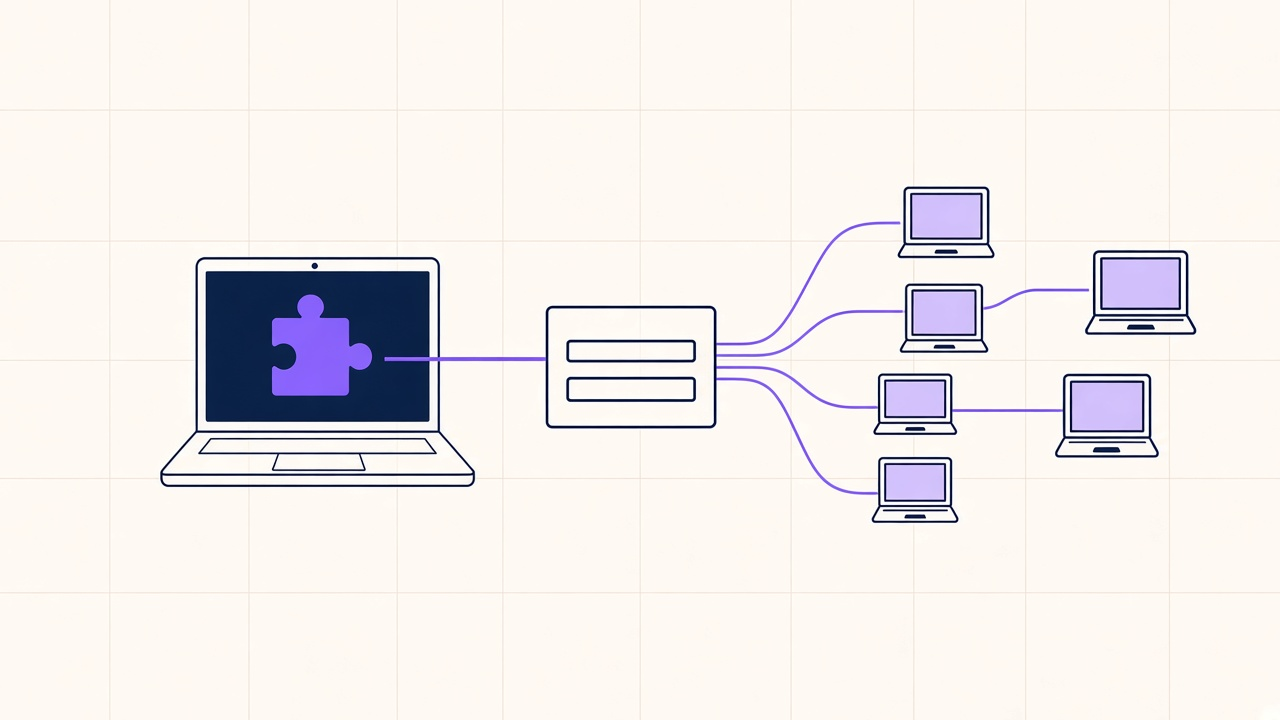
At about 12:47pm Eastern on Wednesday, Nov 11, Huntress saw an operator use access to several cloud-hosted ScreenConnect panels to push commands onto computers already connected to those panels. The commands installed attacker-controlled copies of ScreenConnect, plus a toolkit Huntress calls SCKit. Huntress counted at least 288 hosts across 48 organizations that use Huntress. About a third were reached in the first 10 minutes, and all 288 within about 90 minutes.
ConnectWise, which makes ScreenConnect, posted an advisory that evening. It said it was investigating unauthorized access to certain partner environments, and that it had identified about 400 partner environments with one or more of five third-party extensions and disabled those extensions where it could take action. It also said it had "found no evidence of a compromise of ConnectWise infrastructure or a vulnerability in ScreenConnect itself." The presence of the extensions, it added, does not by itself mean those environments were compromised.
Huntress later tied the activity to one of those extensions: RMM+. On Nov 13 it saw another wave, from new infrastructure, that hit an additional 205 hosts across 41 organizations. On Nov 16, ConnectWise said it had completed its investigation. It also said researchers were still seeing activity against on-premises setups where those extensions were still enabled.
Why the add-on mattered
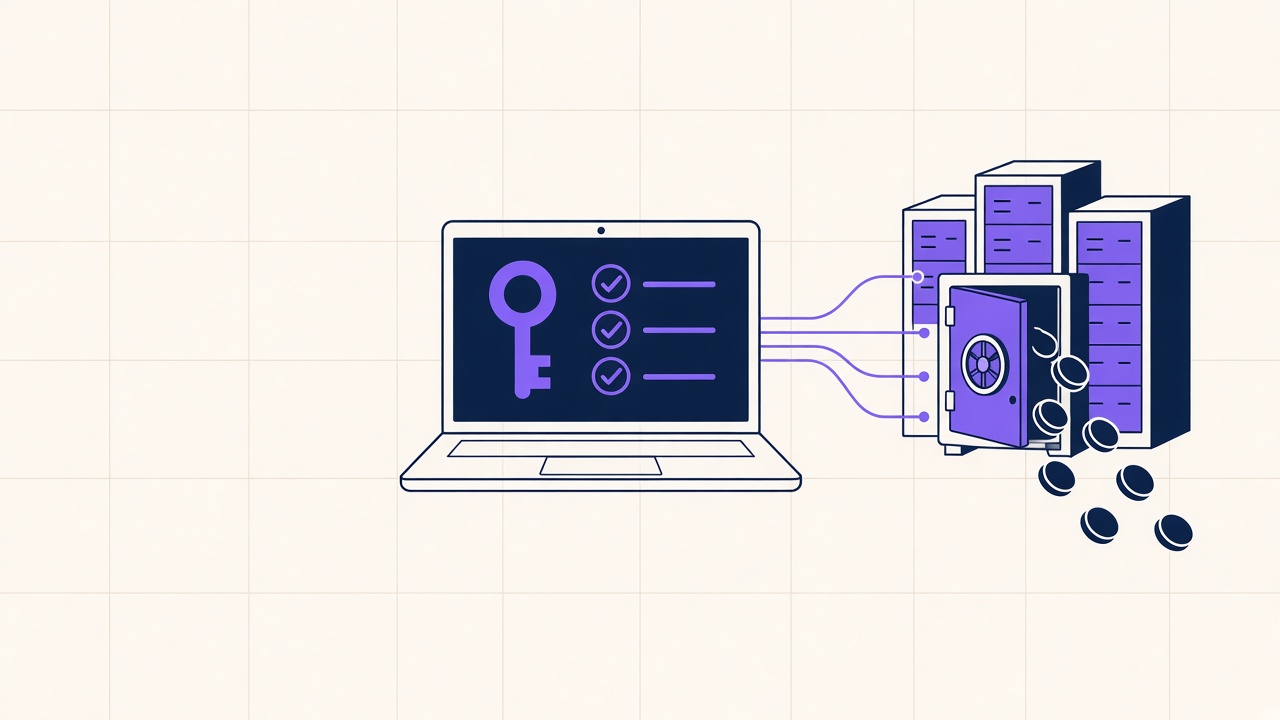
RMM+ is a third-party extension that lets another tool drive ScreenConnect sessions without someone working in the console. Huntress says it bypasses ScreenConnect's user accounts, roles, and MFA, and authenticates with a shared access key instead.
In versions 1.0.31 and 1.0.32, that key defaulted to blank. If an administrator had never set one, a request with no key was treated as authorized. Huntress says the malicious commands showed up in logs linked to RMM+, with no corresponding login activity.
The installs themselves mostly looked ordinary. Huntress wrote that most RMM+ installations it reviewed "were legitimate, usually added for a project and left in place."
That's the part of this story worth your time. The tool that was supposed to require a login and MFA had an add-on that could skip both, and it was still there after the project ended.
SCKit then tried to make the access stick. Huntress says it installed a rogue ScreenConnect client, stopped the real one, and reused the real client's own code libraries so the machine "still looks normal." It also carried code meant to steal a technician's session cookie and use it to reach other customers' systems. Huntress says those takeover attempts "failed in every recovered host log we have checked so far."
The questions I'd ask this week
If someone remotes into your computers, these are the questions I'd ask them. You don't have to run ScreenConnect for the first few to be useful.
-
Which remote-access tool do you use to reach our computers, and which add-ons or extensions are installed? Ask for the product names and versions, not a yes or no.
-
Can any add-on, integration, or API key start a session without a user login and MFA? If the answer is yes, or they aren't sure, that's the gap this attack used.
-
Who is allowed to start a remote session to our machines, and when was that list last reviewed? Include people who left, vendors who finished a project, and accounts created for a one-time job.
-
If you use ScreenConnect, have you disabled RMM+, RMM Plus, Labtech Plus, RMM Plus Password Link, and RMM+ Password Link? ConnectWise has disabled them in the cloud environments it can reach. If your provider runs ScreenConnect on their own servers, they have to disable the extensions themselves, and ConnectWise says they should not turn them back on.
-
Have you checked our computers for a second remote-access client they didn't install? Huntress says the rogue copy was built to look like the real one. This is not something to check by remoting in with ScreenConnect. Huntress tells defenders not to investigate an infected machine over ScreenConnect, because that can spread the toolkit to the technician's own computer.
-
Are your ScreenConnect technician clients on version 26.6.5 or later? That's a separate fix, from September, for a file-transfer flaw (CVE-2026-84869). ConnectWise also says to update ScreenConnect itself to the latest supported version, and that updating the server alone doesn't confirm the technician clients are updated.
-
How would you notice a remote session that didn't have a matching login? In this case, the commands were in the logs, but they weren't tied to a user signing in.
Write down the answers, with dates. If a third party runs the tool, you still own what it can reach.
Why this matters if you handle CUI
CMMC Phase II is still paused. Your obligations aren't. Hunton, writing on Nov 10, said the pause that began on Jul 13 remains in effect with no announced end date. If your contracts carry DFARS 252.204-7012, you already have to implement NIST SP 800-171 on systems that handle covered defense information, and report a cyber incident to DoD within 72 hours of discovery.
A few controls map directly to this story:
- 3.1.1 Limit system access to authorized users, processes acting on behalf of authorized users, and devices (including other systems).
- 3.1.12 Monitor and control remote access sessions.
- 3.4.1 Establish and maintain baseline configurations and inventories of organizational systems, including the remote-access tools and add-ons in your environment.
- 3.5.3 Use multifactor authentication for local and network access to privileged accounts, and for network access to non-privileged accounts.
If your system security plan says these are implemented, you should be able to show which remote-access tools are in use, which add-ons they have, and that those sessions can't skip MFA. Your SPRS score is a statement you sign.
The bottom line
This wasn't a missed ScreenConnect patch. ConnectWise says it found no flaw in ScreenConnect itself. It was an add-on that could skip the login, left in place after a project, and used to reach hundreds of computers in minutes.
If you can't name every tool, and every add-on, that can reach your computers remotely, that's the place to start.
Want a second set of eyes on who can reach your computers? Book a Cyber Risk Strategy Call: https://start.funcshun.com
Felipe Isaza is the founder of FUNCSHUN Cybersecurity, a Miami firm that helps South Florida businesses with cybersecurity, IT support, and compliance, including CMMC.
Sources
- Huntress, "SCKit Worm Installs Rogue ScreenConnect Clients and Session Cookie Relays Across Hundreds of Endpoints" (Nov 11, 2026, updated Nov 13): https://www.huntress.com/blog/sckit-worm-rogue-screenconnect
- CyberScoop, "Rogue remote-access campaign spread through ScreenConnect add-on, researchers say" (Nov 12, 2026): https://cyberscoop.com/connectwise-screenconnect-sckit-attack/
- ConnectWise Trust Center, "ScreenConnect security advisory: Precautionary extension disabling and partner guidance" (first posted Nov 11, 2026, latest update Nov 16): https://www.connectwise.com/company/trust/advisories
- Hunton, "CMMC Phase 2 Remains Paused: What's Next?" (Nov 10, 2026): https://www.hunton.com/government-contracts-intelligence-briefing/cmmc-phase-2-remains-paused-whats-next
- DFARS 252.204-7012, Safeguarding Covered Defense Information and Cyber Incident Reporting: https://www.acquisition.gov/dfars/252.204-7012-safeguarding-covered-defense-information-and-cyber-incident-reporting
- NIST SP 800-171 Rev 2, Protecting Controlled Unclassified Information in Nonfederal Systems and Organizations: https://csrc.nist.gov/pubs/sp/800/171/r2/upd1/final